
Wholesome Story vs Pink Stork: Which Inositol Fits Better?
Comparing Wholesome Story vs Pink Stork? This guide explains mainstream capsule logic versus a more branded alternative and which buyer each one fits best.
by Eco Hormone Balance Editorial Team · Published March 11, 2026 · Evidence & product details rechecked August 7, 2026
How we evaluate these products
This comparison is a desk-research review. We base it on product labels, manufacturer and retailer information, and peer-reviewed evidence (PubMed/PMC), assessed under a multidisciplinary editorial framework covering clinical, pharmacy, dietetics, and supplement-quality criteria.
- Formula and ratio against the studied evidence
- Daily dose and serving burden
- Third-party testing and certifications
- Price per day (with the check date shown)
- Availability in the US market
- Safety, interactions, and who should ask a clinician first
We have not independently lab-tested these products. Rankings reflect formula, evidence alignment, and practical criteria — never commission.
Product details and prices checked August 7, 2026 — prices vary by retailer and over time.
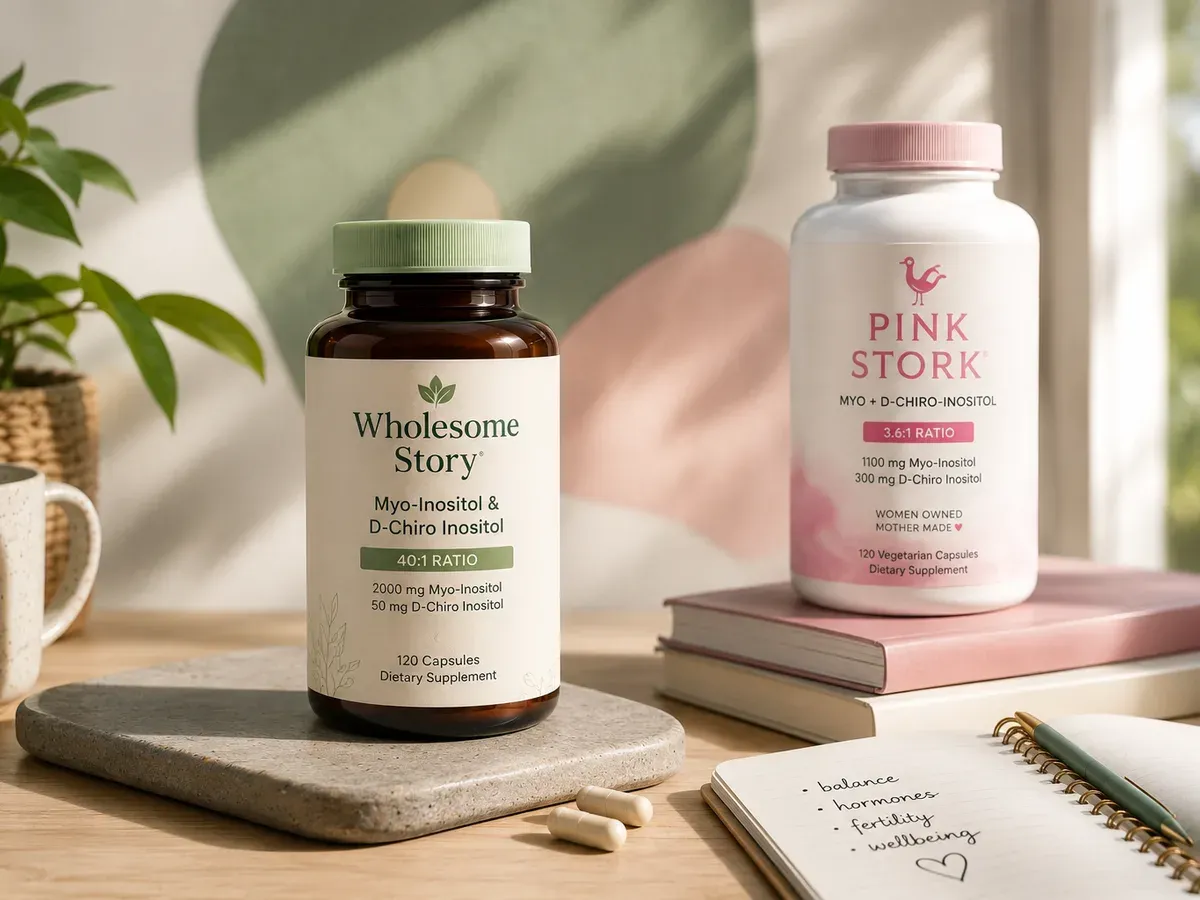
Wholesome Story and Pink Stork can end up on the same shortlist, but they persuade buyers in very different ways. Wholesome Story feels like the cleaner mainstream capsule default. Pink Stork feels more personality-driven and less benchmark-like.
That is why this page works when it helps the reader separate trust style from formula style — and, in this case, the real difference is the ratio, not the branding. Buyers are comparing what kind of product story feels easiest to commit to, and the 3.6:1 versus 40:1 split is the fact that decides it.
Quick answer
- Pick Wholesome Story for the safer mainstream capsule recommendation.
- Pick Pink Stork if you are specifically drawn to a more branded, less standard option.
- If you want the best fertility-leaning capsule middle ground, Fairhaven still matters more than either of these two extremes.
Where Wholesome Story wins
Wholesome Story wins because it is easier to defend broadly. It looks like the standard answer many buyers expected to find when they started shopping.
Where Pink Stork wins
Pink Stork wins when the buyer wants something that feels more specific and more emotionally branded, even if that also makes it less standard inside the core comparison set.
The real difference is the ratio
Wholesome Story anchors on the studied 40:1 myo-to-d-chiro ratio; Pink Stork uses a 3.6:1 mix that is much heavier in d-chiro. That is the practical difference between the two — not the branding. The 40:1 default is easier to defend; the 3.6:1 only earns its place when the buyer specifically wants that more specialized profile.
What the evidence says about the ratio difference
The RCT that compared seven myo-inositol to D-chiro-inositol ratios (2 g twice daily for three months) found 40:1 best for restoring ovulation in PCOS — and shifting the ratio in favour of D-chiro made the reproductive effect worse, not better. That is why 40:1 is the studied default, and why a D-chiro-heavy formula like Pink Stork's 3.6:1 is a deliberate departure, not a neutral variation.
The guideline meta-analysis pooled 40:1-style protocols, which is the evidence Wholesome Story sits on. Pink Stork's ratio has a more specialized evidence story, but the mainstream base — and the burden of explaining the tradeoff — belongs to the 40:1 pattern.
How to decide
- Choose Wholesome Story for the safer, better-studied default.
- Choose Pink Stork only if you understand and want the specialized ratio.
The D-chiro tradeoff is not neutral
In the trial that compared seven ratios, adding more D-chiro than the 40:1 pattern actually reduced the reproductive benefit. Pink Stork's 3.6:1 formula is D-chiro-heavy, so it only makes sense if you understand and want that tradeoff — for general PCOS support, the studied 40:1 default is the safer first choice unless your clinician advises otherwise.
Cost per day: the part most comparisons skip
Here is the math, with prices checked March 10, 2026 — prices vary by retailer and change over time:
- Wholesome Story (30 servings per container): $27.95. 1 serving per day → 30 days per container → about $0.93 per day.
- Pink Stork 3.6:1 (30 servings per container): $42. 1 serving per day → 30 days per container → about $1.40 per day.
- Fairhaven Health (30 servings per container): $24.99. 1 serving per day → 30 days per container → about $0.83 per day.
- Optify (30 servings per container): $35.99. 1 serving per day → 30 days per container → about $1.20 per day.
On a per-serving basis, Wholesome Story works out to about $0.93 per day versus Pink Stork 3.6:1's $1.40 — a difference of about $0.47 per day.
The honest takeaway: among these, Fairhaven Health is the more affordable daily routine on paper, but the right choice still depends on the format and serving burden you will actually stick with. Compare price per day rather than price per bottle.
Final verdict
Wholesome Story stays stronger as the broad capsule default because it anchors on the studied 40:1 ratio with the least to explain. Pink Stork only becomes the better fit when the buyer actively wants the brand feel and the D-chiro-heavy 3.6:1 tradeoff on purpose — that is a deliberate choice for a specific buyer, not an upgrade over the studied default.
What to read next
Finish your research with the guides that explain the formula, then compare the leading products before you commit.
References
- Inositol for Polycystic Ovary Syndrome: A Systematic Review and Meta-analysis to Inform the 2023 Update of the International Evidence-based PCOS Guidelines
- Inositol is an effective and safe treatment in polycystic ovary syndrome: a systematic review and meta-analysis of randomized controlled trials
- The 40:1 myo-inositol/D-chiro-inositol plasma ratio is able to restore ovulation in PCOS patients: comparison with other ratios
- Recommendations from the 2023 International Evidence-based Guideline for the Assessment and Management of Polycystic Ovary Syndrome
Frequently Asked Questions
For a broad mainstream recommendation, usually yes. Pink Stork can still fit the buyer who wants its more branded style on purpose.
Because it sits less neatly inside the cleaner mainstream 40:1-style benchmark logic many buyers expect.
Fairhaven is often the better middle ground if you want a more specialist but still defensible capsule option.
Because the evidence is built on the 40:1 pattern: the RCT that compared seven ratios found 40:1 best for restoring ovulation, and shifting toward more D-chiro made the reproductive effect worse. Pink Stork's 3.6:1 is D-chiro-heavy, so it is a specialized formula with less direct support — it only earns its place when you understand and want that tradeoff, ideally with clinician input.